Why Does a Cat Suddenly Bite? Causes and Solutions


Why Cats Suddenly Bite is a common question among cat owners. Cats are loving, playful, and independent pets. However, even a friendly cat may suddenly bite its owner.Understanding the reason behind the behavior is important. Instead of punishing the cat, you should observe its body language and surroundings. This can help you identify the trigger and choose a better solution.
Why Cats Suddenly Bite: Common Reasons
A cat rarely bites without a reason. Sometimes the reason is easy to notice, while other times it can be subtle. For example, your cat may become uncomfortable during petting, but you may not notice the early warning signs.
Cats also have different personalities. Some enjoy long periods of cuddling, while others prefer short interactions. Therefore, learning your cat’s individual behavior can make daily communication easier.
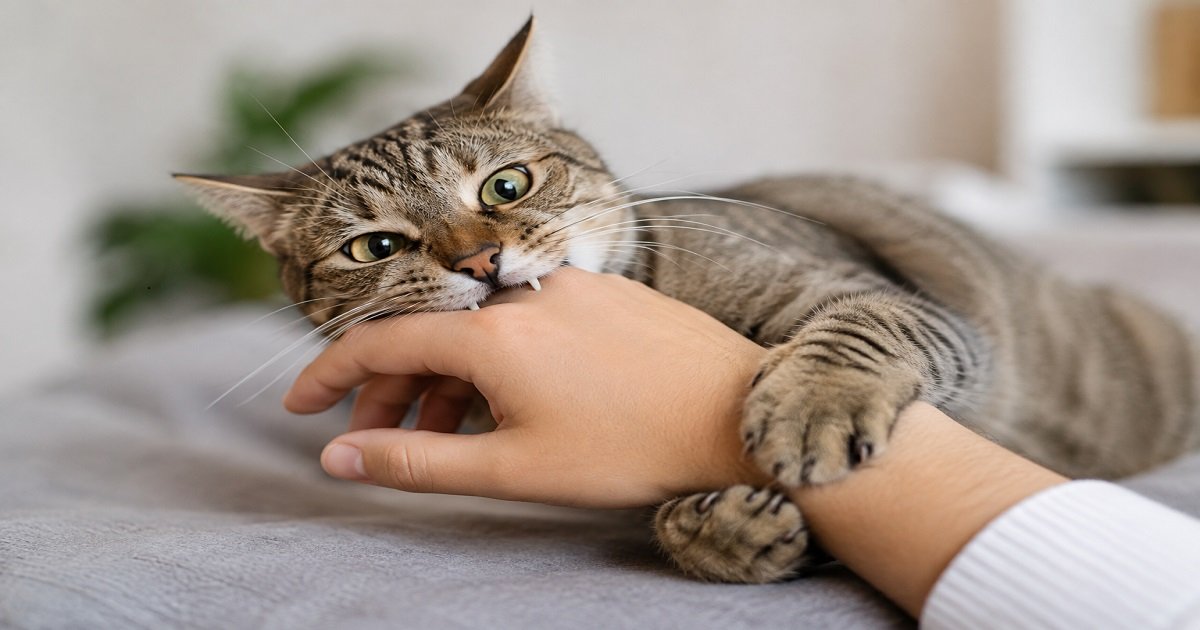
Here are some common reasons why a cat may suddenly bite:
- Fear or anxiety
- Overstimulation during petting
- Playful behavior
- Pain or illness
- Stressful surroundings
- Territorial behavior
- Frustration
- Lack of proper socialization
- Redirected aggression
Let’s look at these causes in more detail.
Cats may bite because of fear, stress, overstimulation, playfulness, pain, or territorial behavior. Understanding cat aggression and biting behavior can help owners identify the reason behind sudden biting and respond appropriately.
1. Fear and Anxiety
Fear is one of the most common reasons for sudden biting. A cat may bite when it feels threatened or trapped. Loud sounds, unfamiliar people, other animals, or sudden movements can make a cat nervous.
For instance, a cat may hide when guests arrive. If someone tries to pull it out from under furniture, the cat may bite because it feels unsafe.
Therefore, give your cat a quiet place where it can retreat when necessary. Never force a frightened cat to interact with people. Instead, allow it to approach when it feels comfortable.
2. Overstimulation During Petting
Some cats enjoy being petted, but they have a limit. If you continue touching the same area for too long, your cat may become overstimulated.
At first, the cat may enjoy the attention. However, its body language can change gradually. You might notice tail movement, flattened ears, skin twitching, or a sudden change in posture.
These signs mean it may be time to stop.
Instead of waiting for a bite, watch your cat carefully. If the tail starts moving rapidly or the ears move backward, give your pet some space.
3. Play Biting
Young cats often bite during play because they are learning how to interact with their environment. They may chase hands, grab fingers, or attack moving feet.
Although playful biting may look harmless, allowing a kitten to bite human hands can create a bad habit. As the cat grows, its bite can become stronger.
Therefore, use toys instead of your hands during play. Wand toys, balls, soft toys, and interactive cat toys can help redirect the behavior.
How to Stop Play Biting
If your cat bites during play, stop the game calmly. Do not hit or shout at the cat. Instead, move your hand away and offer a suitable toy.
With consistent training, your cat can learn that toys are appropriate for biting and chasing, while human hands are not.
4. Pain or Health Problems
A sudden change in behavior should not always be treated as a training problem. Sometimes a cat bites because it is experiencing pain.
For example, a cat with dental problems may become aggressive when someone touches its face. Similarly, an injury, skin problem, joint pain, or another health issue can make normal handling uncomfortable.
If your normally gentle cat suddenly becomes aggressive, pay attention to other changes as well.
These may include:
- Reduced appetite
- Hiding more than usual
- Sleeping more
- Difficulty walking
- Excessive licking
- Changes in litter box habits
- Avoiding touch
If you notice these signs, consult a veterinarian. Finding the underlying problem is more important than simply correcting the biting.
5. Stressful Environment
Cats can become stressed when their environment changes. Moving to a new home, introducing another pet, changing furniture, or having frequent visitors may affect their behavior.
Even small changes can sometimes make a sensitive cat uncomfortable.
To reduce stress, maintain a predictable routine. Feed your cat at regular times, provide a comfortable resting area, and keep essential resources easily accessible.
Additionally, give your cat places where it can hide and relax. A quiet corner, covered bed, or elevated resting area can help your pet feel more secure.
6. Territorial Behavior
Cats are naturally territorial animals. They may become defensive when another animal enters their space.
For example, a cat may see another cat outside the window and become highly alert. If you approach it while it is already excited, it may redirect that reaction toward you.
This is known as redirected aggression.
Therefore, avoid touching or picking up an agitated cat. Give it enough time to calm down before attempting interaction.
7. Frustration
Cats can also bite when they are frustrated. A cat may become frustrated if it cannot reach something it wants or cannot complete a natural behavior.
For example, watching birds through a closed window may create excitement and frustration. Similarly, insufficient play can leave an active cat restless.
Regular interactive play can help. However, the amount of activity should match your cat’s age, personality, and physical condition.
8. Lack of Socialization
Kittens learn important social skills during their early development. Cats that have limited positive interaction with people may become nervous around human touch.
However, this does not mean an unsocialized cat cannot improve. With patience and positive experiences, many cats can become more comfortable.
Start with short interactions. Let the cat approach you instead of forcing contact. Reward calm behavior with praise, treats, or play.
Over time, your cat may begin to associate human interaction with positive experiences.
Understanding Cat Body Language
One of the best ways to prevent biting is to understand body language.
Cats communicate through their ears, eyes, tail, posture, and facial expressions. Therefore, watching these signals can help you notice discomfort before a bite occurs.
Signs Your Cat May Be Uncomfortable
Look for signs such as:
- Ears turned backward
- Rapid tail movement
- Dilated pupils
- Stiff body posture
- Growling or hissing
- Attempting to move away
- Skin twitching
- Sudden freezing
If you notice several of these signs, stop the interaction and give your cat some space.
How to Stop a Cat From Biting
Stopping biting requires patience and consistency. Punishment is usually not a good solution because it can increase fear and stress.
Instead, focus on identifying the trigger.
Use Toys During Play
Never encourage your cat to chase your fingers. Although it may seem cute when a kitten is small, the habit can become problematic later.
Use toys that create distance between your hands and the cat. This allows your pet to chase, grab, and bite safely.
Avoid Forced Interaction
If your cat does not want to be touched, respect its choice. Cats are more likely to trust people who respect their boundaries.
Let your pet come to you. Then offer gentle attention for a short period.
Reward Calm Behavior
Positive reinforcement can be helpful. When your cat remains calm during handling, reward it with a small treat, praise, or a favorite activity.
As a result, your cat can gradually learn that calm behavior leads to positive experiences.
Keep a Consistent Routine
Cats often feel safer when their daily routine is predictable. Try to maintain regular feeding, play, and rest times.
A stable routine can reduce unnecessary stress and may improve overall behavior.
What Should You Do If a Cat Bites You?
If a cat bites you, stay calm. Do not hit, kick, or chase the animal.
Carefully move away and give the cat some space. Then clean the bite area properly. Cat bites can introduce bacteria into the skin, so medical attention may be appropriate, especially for deep puncture wounds, swelling, redness, increasing pain, or other concerning symptoms.
Also, consider why the bite happened. Was the cat frightened? Were you touching a sensitive area? Was it playing? Identifying the trigger can help prevent another incident.
When Should You Contact a Veterinarian?
Occasional playful biting is not always a serious problem. However, sudden or repeated aggression deserves attention, particularly when it appears alongside other unusual behavior.
Contact a veterinarian if your cat:
- Suddenly becomes aggressive
- Bites without an obvious trigger
- Shows signs of pain
- Stops eating normally
- Hides frequently
- Has major changes in behavior
- Becomes aggressive when touched
A veterinarian can help determine whether a medical condition is contributing to the behavior.
Final Thoughts
A cat that suddenly bites is usually communicating something. The reason may be fear, overstimulation, play, stress, frustration, territorial behavior, or pain.
Therefore, punishment should not be the first response. Instead, observe your cat’s body language, identify possible triggers, and provide appropriate alternatives.
Use toys for play, respect your cat’s boundaries, maintain a calm routine, and reward positive behavior. Most importantly, remember that every cat is different. With patience, understanding, and consistent care, you can build a stronger relationship with your pet and reduce unwanted biting behavior.