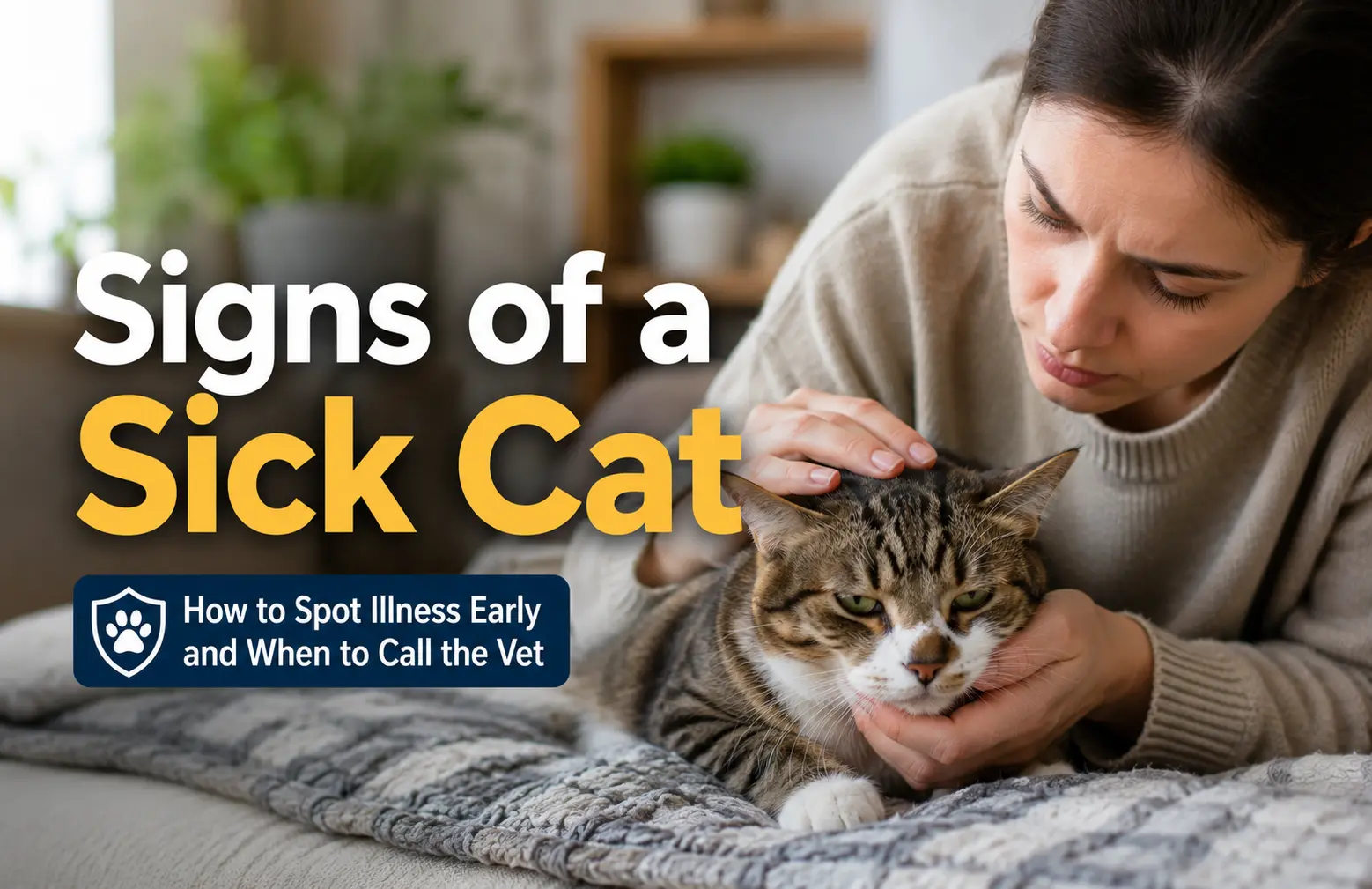
Signs of a Sick Cat: How to Know When Your Cat Needs Help

Cats are masters at hiding how they feel. That’s not an exaggeration — it’s actually a survival instinct. In the wild, showing weakness attracts predators. So cats learned to mask pain and illness extraordinarily well. Even domesticated cats who have never spent a day outside carry this instinct with them.
The result is that by the time a cat shows obvious signs of being unwell, the problem has often been quietly developing for days. Owners miss the early window when treatment is simplest and most effective.
This guide is about closing that gap. Learning to read subtle early signs means you catch problems before they become serious.
What this covers: key warning signs of a sick cat, what they typically point to, when you need a vet immediately, and simple habits that help you stay ahead of problems.
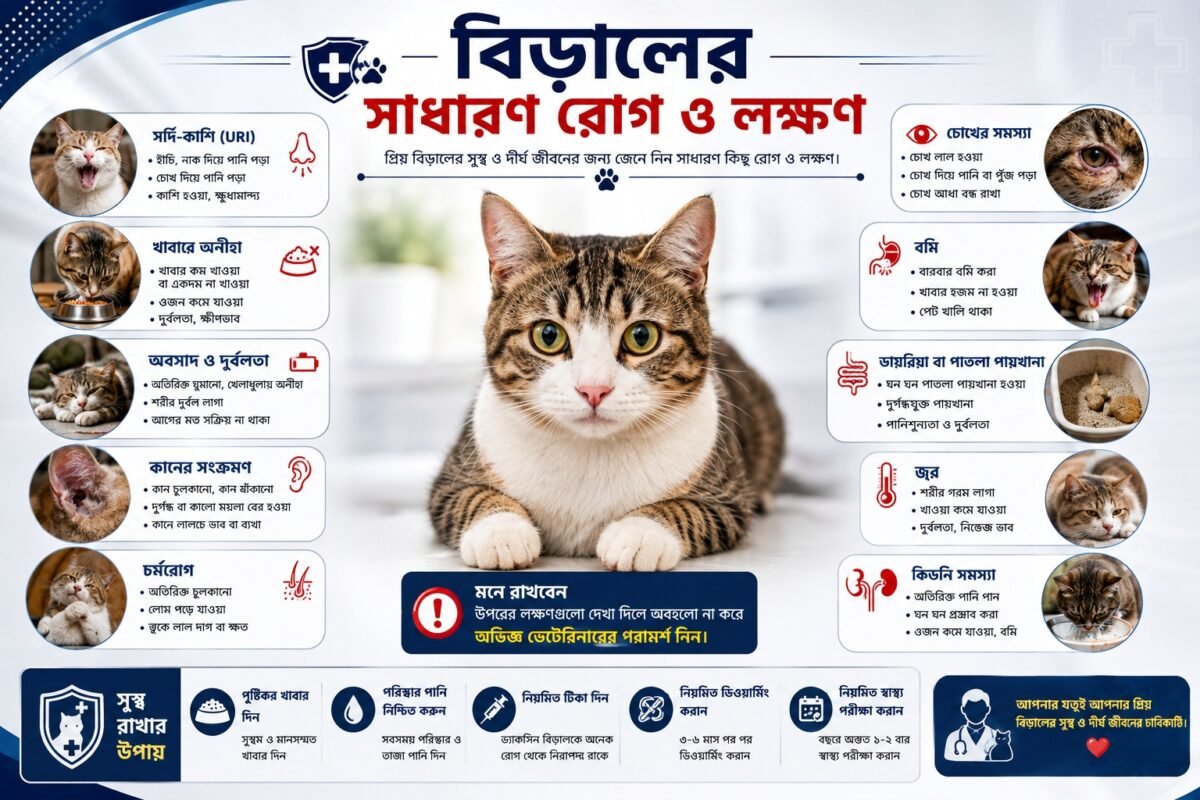
Changes in Eating and Drinking Habits
Appetite is one of the most reliable indicators of how your cat is actually feeling. Most cats are consistent eaters with predictable routines. When that routine changes, something is usually behind it.
A cat skipping one meal occasionally isn’t automatically concerning. But a cat refusing food for more than 24 hours needs attention. Cats are uniquely vulnerable to hepatic lipidosis — fatty liver disease — which develops surprisingly quickly when they stop eating. Unlike dogs, cats cannot safely go without food for extended periods.
Drinking habits matter equally. A cat suddenly drinking far more water than usual can be an early sign of kidney disease, diabetes, or hyperthyroidism — all common in cats, especially older ones. A cat who stops drinking almost entirely is heading toward dangerous dehydration faster than most owners expect.
Track both appetite and water intake daily. These two things are often the earliest indicators that something is off.
Vomiting and Digestive Changes
Cats vomit occasionally and most owners accept this as normal. Hairballs, eating too fast, or nibbling grass cause one-off vomiting that resolves quickly on its own.
What’s different is repeated vomiting throughout a day, vomiting containing blood, or vomiting combined with complete appetite loss and lethargy. That pattern needs a vet, not more waiting.
Litter box changes matter just as much. Diarrhea lasting more than 24 hours, stool containing blood, or a cat straining in the litter box without producing anything all need professional attention.
That last one especially. A cat straining to urinate without producing anything is a potential urinary blockage — a genuine emergency, particularly in male cats. If you observe this, get to a vet immediately. This situation deteriorates very fast.
Lethargy and Behavior That Feels Off
You know your cat’s personality better than anyone. That baseline knowledge is one of your most valuable tools when something changes.
A cat who normally greets you at the door but has stopped. A cat who used to play and now shows zero interest. A cat who has become withdrawn when she’s always been social. These shifts are meaningful even when they seem small.
One quiet day is usually nothing. Two or three days of noticeably different energy without obvious explanation is a pattern worth taking seriously.
Pain often shows up as behavior change before anything physical appears. A cat who hisses when you touch a specific area is telling you that area hurts. A social cat who disappears into corners is frequently dealing with something internally that you cannot see yet.
| Behavior Change | What It Often Indicates |
|---|---|
| Hiding more than usual | Illness, pain or stress |
| Sudden aggression or hissing | Pain or discomfort |
| Stopped grooming herself | Illness or dental pain |
| Avoiding the litter box | Urinary issue or aversion |
| Loss of interest in play | Lethargy or underlying illness |
Trust what feels different to you. Cat owners who know their cats well catch things early precisely because they notice these small shifts.
Physical Signs Worth Checking
Some signs of illness are visible if you build a quick check into your daily routine. A minute or two of observation means you notice changes early rather than weeks after they started.
Eyes should be clear and bright. Cloudiness, redness, squinting, or a visible third eyelid — a pale membrane creeping across the inner corner of the eye — are all signs worth investigating. The third eyelid showing is particularly significant as cats rarely display it when feeling well.
Ears should look clean and smell neutral. Dark waxy buildup, a strong smell, or a cat constantly shaking her head almost always indicates an infection or mites needing treatment.
Gums are something most owners never check but genuinely should. Healthy cat gums are pink and moist. Pale, white, yellow, or bluish gums indicate serious problems and need immediate veterinary attention — not tomorrow, today.
Coat condition reflects internal health more than most people realize. Cats are fastidious groomers. When a cat stops grooming and develops a dull or matted coat, something is wrong. This is often one of the earliest visible signs of illness.
| Physical Sign | Possible Cause |
|---|---|
| Third eyelid showing | Illness or eye infection |
| Yellow or pale gums | Liver disease or anemia |
| Dull or matted coat | Illness or stopped grooming |
| Unexplained weight loss | Hyperthyroidism or diabetes |
| Bloated belly | Fluid buildup or internal issue |
When to Go to the Vet Immediately
Some situations are not ones to monitor at home. Go immediately if your cat is breathing with her mouth open, has pale or yellow gums, is straining to urinate without producing anything, has collapsed, has been vomiting repeatedly throughout the day, has consumed something toxic, or is in obvious pain.
Open mouth breathing in a resting cat is never normal. Unlike dogs, cats almost never pant. If you see this, treat it as an emergency without waiting.
For important but less urgent concerns — appetite loss beyond 24 hours, diarrhea with blood, significant behavior changes, or anything that simply feels wrong — a same-week appointment is the right call.
Never feel embarrassed calling your vet about something that turns out to be minor. A good vet would always rather hear from a concerned owner than see a cat brought in too late.
FAQs
Q1. My cat vomited once but seems fine now. Should I worry?
Probably not if it was a single episode and she’s back to normal afterward. Watch her through the rest of the day. If she eats her next meal and seems comfortable, she most likely brought up a hairball or ate too fast. If vomiting repeats or she seems quiet, call your vet.
Q2. My cat is hiding but still eating. Is that illness?
It can be. Hiding is one of the classic ways cats manage pain and discomfort. If it’s been more than a day or two and she’s not coming out for normal activities, mention it to your vet — especially if anything else feels slightly different.
Q3. How do I know if my cat is in pain?
Cats rarely cry out in pain. Instead look for squinting, a hunched posture, reluctance to be touched in certain areas, and reduced activity. A tense or flattened expression around the eyes and muzzle is another real indicator of feline pain most owners miss.
Q4. How often should a healthy cat visit the vet?
Once a year for a routine checkup and vaccinations is the baseline for healthy adult cats. Cats over ten benefit from checkups every six months because conditions like kidney disease and hyperthyroidism develop gradually and respond much better to early detection.
Q5. My cat stopped grooming. Is that serious?
Yes, take it seriously. When cats stop grooming it almost always means something is wrong — pain making certain positions uncomfortable, illness affecting energy, or dental pain. A vet visit is the right next step rather than waiting to see if it resolves.
Your Cat Is Counting on You to Notice
Cats don’t ask for help. They won’t tell you something is wrong. They’ll carry on going about their routine while quietly dealing with something that deserves attention.
The responsibility of noticing falls entirely on us. Not to be anxious over every small thing — but to be observant enough to catch when something genuinely feels different and act on it without waiting too long.
The cat owners who catch problems early aren’t the ones with veterinary training. They’re simply the ones who were paying attention.
Looking for quality cat food, supplements and health products you can trust? petfeedy.co carries everything your cat needs to stay healthy — trusted brands, delivered anywhere in Bangladesh.